Software copies the process.
Including the parts nobody wants to keep.
A broken process plus software is still a broken process. Only now it’s licensed, supported and harder to change. For most companies that already happened years ago, and the workarounds went in with it. Digitalist takes one process you already run, finds out how the work actually happens, and tells you what it costs and what is worth changing. You don’t need a project underway to have this problem.
The project was signed off years ago.The workarounds are still on the invoice.
The system went in three or four years ago. It was specified, procured, built and rolled out, and everyone involved did their job well. Then the double entry stayed. The approval still sits with one person who is sometimes on holiday. The exception that comes up twice a week is still handled over the phone, outside the system.
None of that shows up as a problem anywhere. There is no incident, no complaint, and no line in the budget called workarounds. It is simply how the work goes, and it has gone that way long enough that nobody questions it.
That is where the money is. Not in the project budget, which was spent and closed, but in the hours that go every week into holding the process together, and in the change request it now takes to alter anything at all.
None of that shows up as a problem anywhere. There is no incident, no complaint, and no line in the budget called workarounds. It is simply how the work goes, and it has gone that way long enough that nobody questions it.
That is where the money is. Not in the project budget, which was spent and closed, but in the hours that go every week into holding the process together, and in the change request it now takes to alter anything at all.
Three questions about a process you already run: how long does it actually take, how often does it come back, and who handles the exception? If the answers take more than a minute to find, that is the process to look at.
7×
The ones getting results redesigned the work. Among 152 CEOs of companies over $500M in revenue, the high performers were seven times more likely to have redesigned how work gets done end-to-end, rather than making the existing steps faster. (BCG, July 2026)
10→1
Faster task, same waiting time. One company cut a ten-day task down to a single day, and its customers still waited ten days for an answer, because the process around that task had not changed. (BCG, August 2026)
26%
And then it costs more than agreed. More than a quarter of organisations exceeded the budget on their last major system project, most often because further technology turned out to be needed. (Panorama Consulting, 2026 ERP Report)
Things we hear about processes nobody is planning to changeNone of these get raised as problems. The money still goes into them.
Find out. Decide. Build.In that order, whether you are replacing a system or simply want to know what one process really costs.
Two things we won’t doWorth saying out loud, because it costs us work sometimes.
We don’t produce slides we won’t build ourselves. Consultancies sell the analysis and hand delivery to someone else. We take the same work into the code and stay responsible for it afterwards.
We don’t build what was ordered if what was ordered is wrong. Software houses take the specification and build it. We check first whether there is a process behind it worth copying into software, and sometimes the answer is not yet.
This is a standard, not a promise. We don’t win this argument every time, including with clients. It is still where every project starts, and it is the main reason the ones that go well go well.
The first step: Waypoint process mappingWaypoint is Digitalist’s fixed-price process mapping. One process, mapped the way it actually runs, with no obligation to continue.
3–6wk
Three to six weeks from kickoff to an answer you can act on. No open-ended engagement.
€15K
Small enough to approve without a procurement round, specific enough to take to whoever holds the budget.
0
No obligation to continue. You are paying for the answer, and if it points to a build we can do that, but it gets shaped by what we found rather than sold up front. Plenty of clients take the map and carry on themselves.
What comes after the process is mappedListed so you know the road continues. Nothing to decide here.
Modernisation and integrations. A legacy system is usually a process that set hard, and once the process is decided the system can follow it. Most of the cost in an operational process sits in the handoffs between systems, and that is ordinary engineering work.
AI where it pays for itself. Some steps in some processes get cheaper this way and most don’t. Which is which comes out of the first step, and that is the only basis we will use for spending money on it.
Findability. The same principle applied to content: if the structure is wrong, the answer on your own site can’t be found, not by people and not by the models that increasingly answer for them.
Selected work from across DigitalistSame approach, different domains.
Varjo
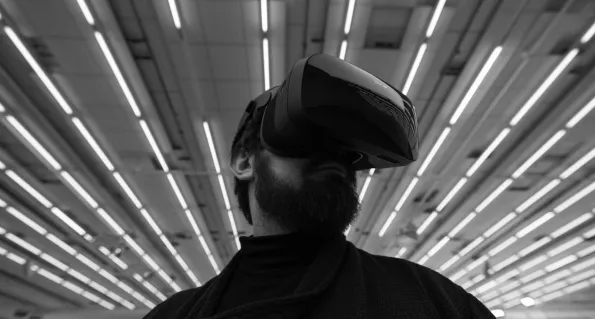
Digitalist built three webshops for Varjo in just nine weeks. Using a composable e-commerce approach, we enhanced user experience, improved scalability, and delivered tailored B2B and B2C storefronts.

Viking Line
Digitalist partnered with Viking Line to develop a future-proof digital platform and innovative onboard app, enhancing passenger experiences and helping Viking Line stand out in the Baltic Sea cruise market.

Finnair
Digitalist partnered with Finnair to create a customer-driven innovation culture, engaging global customers early in service development and enhancing the airline's ability to differentiate in a competitive market.
Let's
talk
!
Reach
out!